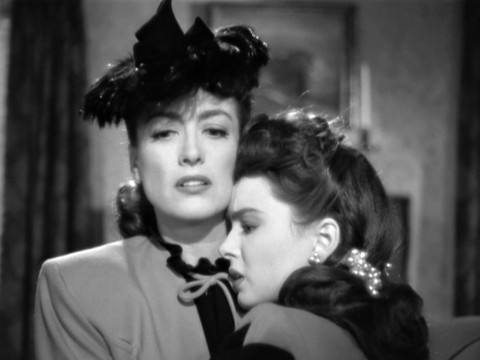
Wednesday, September 14, 2011

Silencio

In September, on Slate, Bill Wyman wrote this about Mullholland Drive, Memento, Waking Life, and Donnie Darko, four films released in the months before September 11, 2001 but that, for him, evoked something essential about that day:
A central character separates, in one way or another, from life, from the reality of being. Each film evocatively creates a heightened sense of reality for its characters that we the audience inhale as well. Each features a shock, a wrenching sideways, whether from that plane engine falling on a suburban house to the revelation that something is very, very wrong with poor Betty. The tragedy that hangs over each story is another similarity: In each case, the dread of loss touches the audience in some fundamental way...In each of these signal works, a sense of humanity, of the great worth of every life—and a shuddering appreciation of the apocalypse that accompanies every individual death—is palpable.
I want to speak now about David Lynch's Mulholland Drive because, of all of these films, it resonates most powerfully with the "wrenching sideways" September 11th still represents for me. I ask you to watch the scene below which is, for me, among the most terrifying in all of cinema.


...it's the second one I've had, but they're both the same. They start out that I'm in here...By disrupting our syntactical expectations, "Dan's" stilted language immediately communicates the moment's hallucinatory wrongness. There is his pale face, which becomes more discolored and sweaty as the scene proceeds. You can see him fighting against his mounting panic, struggling to maintain a relaxed expression--a struggle which only makes his face appear more contorted. There is the yet-unseen figure of the dark man behind the wall: He's the one that's doing it. Finally, there is the awful moment when Dan realizes that either he has not escaped from the nightmare, or the nightmare has invaded his waking life.

In many ways, this scene, which comes very near the beginning of the film and whose characters (apart from the diner itself) never appear again, is a template for the rest of the film. At the heart of Mullholland Drive is a deeply unhappy woman, her elaborate, desperate dream, and a great rupture that shears her from herself. As with Dan's nightmare and the film itself, this dream (or vision, or work of wild imagination) is ontologically unstable. It borrows and reconfigures facts from the waking world and burlesques that world's atmospheres and sensations. In return, the dream bleeds itself back through the gauze of everyday life. We never quite know what is fact and what is hallucination, what is "real" and what is imagined. This is a source of great dread.

* * *

Here I will defer to David Foster Wallace's great essay on Lynch's Lost Highway to help describe the way it feels to watch the first part of Mulholland Drive. Wallace argues that a thing feels "Lynchian" when "the very macabre and the very mundane combine in such a way as to reveal the former's perpetual containment within the latter." Among the most significant examples of this containment is Lynch's fascination with the mundane artifacts of daily life. No director since Hitchcock has invested everyday objects with as much totemic dread as Lynch. In Mullholland Drive, lamps, name tags, light bulbs and especially that blue box and it's blue key give off a sinister glow. The key difference: with Hitchcock, every filmic element is nested perfectly within his careful, ingenious plots. That teacup terrifies because we know that it's being used to poison poor Ingrid Bergman; that telephone turns us cold because we sense that it will collude in some dreadful act. In Lynch's films, objects are similarly transfigured but their meanings are more open ended. They derive their significance less from their relation to the plot's mechanics than from the film's broader, more ephemeral perceptual world; their only logic is the opaque, disembodied logic of dreams. Thus denatured, these objects become foreign and strange, signifying something hidden and nameless and vast.

In keeping with Wallace's idea that darkness is contained within the mundane: throughout much of Diane/Betty's dream, Lynch communicates a profound sense of dread through bright light and high color. The film's first hour radiates high-contrast reds, yellows and blues and is saturated with a painful Los Angelene brightness, a brightness that Betty--a parody of cute, frumpy American naivite--exudes in equal measure.

The platinum colors, the wide, constricted smiles and the alarming optimism all brim with a suspicious, itchy falsity. It isn't so much that these things are hiding something terrible; instead, we sense that, like those totemic objects, they themselves are somehow terrifying. This sense is reinforced by a dark, industrial drone, an airy hum that pervades the film and often blossoms into a menacing minor chord. It seems to emanate from the substance of the world itself, putting lie to Betty's optimism and rendering even the screwball-ish elements of the film's first section grotesque and unsettling.

Throughout Mullholland Drive's first hour, we are visited by strange voices, voices that seem to pierce the dream's bright sheen and communicate to us from the world beyond. Louise, a woman with hooded eyes and a black shawl comes to Betty's door and tells her in a panicked voice, "...Someone is in trouble! Something bad is happening!" Later, Adam, the director, meets a ghostly figure named The Cowboy who delivers bizarrely drawled, syntactically tortured koans, coded messages from some unseen power. All of these things--the light, the sounds, the objects, the cryptic sayings--impart a deep ambience of suspense, of some looming terror. But the source of that suspense remains mysterious; the film brims with a feeling of abstract existential menace--there's a man...he's the one who's doing it-- a dark presence under the skin of everything. Something bad is happening.

* * *

In the weeks and months after September 11th, I had some really awful dreams. Dreams of burning cityscapes, dreams of a thick, acrid smoke enveloping the city, dreams of white-sheeted children with terrible, bloody faces. Other times I would lie awake in bed almost paralyzed with panic, a heat rushing from my guts to the surface of my skin. The air molecules around me felt thick and still and geologically heavy. The frantic, multiplying thoughts in my head were not my own.

Everyday things became dreadful. Newspapers, TVs, the sounds of airplanes, police sirens, the mail, the noises of the city all sent small measures of toxic dread circulating through my body. Reality had been sundered and the world's substance now seemed deeply, irrevocably changed. Violence and fear had pervaded everyday life and were now enmeshed in it. Terrible things that had once felt so abstract and distant were now very close and very real. The world had become sinister and there seemed to be no way to escape. As a woman I met that September put it to me, with matter-of-fact resignation: "nowhere is safe."

One particularly unmooring element of this was the way that the disaster spun its awful aura in all temporal directions. Of course, both the present and our new future seemed suddenly unfamiliar and frightening. But more curiously, the past also felt infected. We came to see that reality before 9/11 was, as Wyman puts it, "heightened." I take that to mean: our culture had wallowed in a bored, almost campy self-parody. The optimism was too shiny and bright, the complacent self-involvement too engrossing. Even that morning, they sky was just too blue, the light too clean and pleasant. This past, like Betty's smile, now felt ominous and suspect. It was a deeply kitschy cultural moment and if David Lynch has shown us anything, it is that kitsch can be terrifying. In retrospect, it seemed that terror had been woven into the fabric all along.

Mulholland Drive's temporal structure speaks to this strange phenomenon. On its driest, most simplistic level, the film's chronology is relatively straightforward: Diane, a struggling actress, falls in love with Camilla; Camilla wins a role that Diane had desperately coveted; Camilla breaks Diane's heart by taking up with the film's director; Diane, by now deeply depressed, has Camilla killed; Diane re-imagines the entire scenario in a dream (with Betty and Rita assuming the Diane and Camilla roles) before finally killing herself.

Of course the film doesn't really work like this (and is considerably less interesting when seen this way). From the viewer's perspective, the dream occurs "before" any of the other events in the film--but an awareness of the film's conclusion has seeped into its emotional logic. Those awful events, including the death of the dreamer herself, are the source of the dream's sense of dread and foreboding. What's more: while the events within the dream unfold more or less chronologically and occupy a full three-quarters of the film's running time, the "waking" section's temporal scheme is fragmented and kaleidoscopic; events are doubled, elided, shifted in and out of sequence.

The result is a narrative shaped more by psychological, emotional and textural ambience than by a sequence of events. This kind of ambience mirrors the character of memory itself. In memory, as in dream, we create collages of image and sensation. We discover new stories in the mesh and pulse, in the shifting strands of wild perception. Through memory, the past becomes an ambient, perpetual present, a present that declares itself not through chronology or causation but through an ebb and flow of image and sensation. This is merely an element of everyday consciousness. But in the time after September 11th, this feeling became dreadful. The poisonous terror of that day seemed to radiate out into all temporal spheres: into our visions of the future, into our memories, into the abiding present.

But what was this terror? What exactly were we afraid of? Certainly, there was the fear of extreme, sudden violence, the very kind of stark fear that terrorism is meant to inspire. It is unquestionably terrifying that death could, without warning, rain down on you out of a clear blue sky and that our quotidian living spaces could be turned against us so suddenly and so profoundly. But nestled within that quite comprehensible fear is something more opaque and primordial. It is this kind of terror, at once nameless and omnipresent, that Lynch refers to by enfolding the horrible within the banal and that he conjures so powerfully in Mulholland Drive.

Our windows, we were told, were not sealed tightly enough. Poisonous air would surely leak through the cracks. It seemed that our bodies--vessels that we are taught to believe are discrete, self-contained objects, sealed off from the dangerous outside world both by our physical skin and by the skin of identity--were too porous, too riddled with perforations and respiring orifices. Those of you who were there will surely remember the acrid, burned smell that pervaded the city in those days. At all times, it felt, this toxic wave could penetrate our skin and compromise our bodily integrity.

Mulholland Drive speaks to this fear by strongly suggesting that we are not the discrete entities we believe ourselves to be. It does this first by questioning the notion that our voices are authentic emanations of our selves. In one scene, we see five singers performing a fifties bubble gum song. But as the camera pulls back we see first that they are in a recording studio, then that they are being filmed and finally that the studio itself is a set on a sound stage. The music is a recording; the physical space is a stage; the performance is a scene in a film-within-a-film. Later, in the beautiful (but really unsettling) "Silencio" scene, a singer performs an intensely moving Spanish-language version of Roy Orbison's "Crying." Betty and Rita (not to mention the viewer) are profoundly moved. Only when the singer collapses and the singing continues do we realize that the music was a recording. By severing the song from the singer, these scenes gently undermine the idea of the self as an expressible thing.

The skepticism goes deeper still. In perhaps the most disorienting of the film's many challenges to narrative expectation, the characters' identities are shown to be deeply unstable. Sunny Betty becomes morose Diane; Rita, a gentle amnesiac who poaches her name from a picture on the wall of a stranger's home, becomes hard-hearted Camilla. As actors, both characters assume new identities with frightening ease.
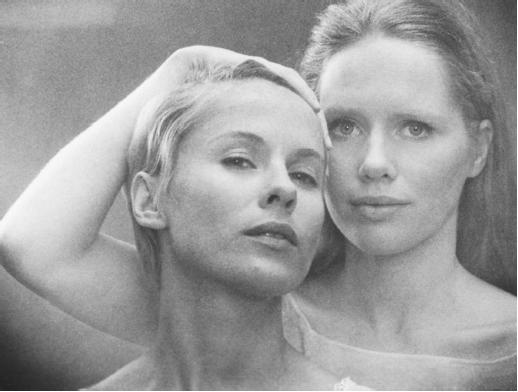

This instability is visually animated in two of the film's most striking moments. In the first, an image that calls to mind Liv Ullmann and Bibi Andersson in Bergman's Persona, Rita dons a blonde wig and becomes Betty's double, an empty vessel absorbing her counterpart's identity. (Not coincidentally, Ullman's character was also an actress, although mute, not amnesiac.) And in one of the film's most hallucinatory sequences, Rita and Betty venture into Diane Selwyn's dark apartment in an attempt to discover Rita's identity. When they find a horrifically decomposed body inside--belonging, we later discover, to none other than Diane--they flee in terror. As they emerge into the daylight, having just laid eyes on the dead body of the dreamer herself, on the creator of the very world they inhabit, the two characters dissolve into a halo of multiple exposures. As if cued by their awful vision, the ephemerality and multiplicity of Betty's and Rita's identities are laid bare.

In these scenes and throughout, Mullholland Drive calls into question the notion of a fixed reality and an idealized, integral self. The characters are multivalent and contingent; the border between inside and outside, self and other, is fluid. In an even remotely benevolent world, this fluidity and mutuality could be understood as perhaps our greatest attribute, the fount of our humanity and compassion. But the Hollywood of Mulholland Drive is a cruel, lonely place, a world of shadowy conspiracies, radical independence and deep isolation. And in such a world, to lose ones' integral selfhood is catastrophic.

We only really begin to understand this when we see the banal nightmare that is Diane's waking life. While the dream was bright and colorful, this new reality is gray and wan. Diane herself is a pale shadow of Betty, her dreamworld avatar. Her skin is sallow, her eyes sunken and bloodshot. While Betty exuded a painfully optimistic energy, Diane is jaded and tired. Her anger and grief have driven her to unthinkable acts and made her a grotesque, almost unrecognizable, version of herself. All of the flowing pluralities of identity, the mediations of self and voice, the layers of consciousness serve to illustrate Diane's loss of herself. And this loss, this apocalypse, as Wyman puts it, is, for me, the source of the film's deepest horror and the germ at the heart of our post-9/11 fear: that reality has been ruptured; that history has become a nightmare; that in the new world, we are not who we believe ourselves to be; that where there once was a self is now, at best, only a confluence of external forces or, at worst, a corroded, atomized reservoir of anger and fear.

* * *

In the margins between waking life and dream, between yesterday and tomorrow, between self and non-self, there is a cloud of unknowing; this is where we live; this is where the music comes from. But in Mulholland Drive's Los Angeles and, I fear, in too much of our own paranoid, atomized, bleakly mediated world, this unknowing, this disequilibrium, is a source of dread and loneliness and suspicion. The world outside cannot be trusted. These people mean you harm.

Tuesday, August 30, 2011

Breaking Bread

"Hunger" (2008) is a very short, very quiet film about IRA volunteer Bobby Sands, who died in Maze Prison in 1981, on the 67th day of a hunger strike. It might be the best movie I've seen this year. "Hunger" was directed by English artist Steve McQueen. This is his film, "Deadpan":


When it came to arresting visual images, the IRA were no slouches themselves. This is one of their many terrifying murals:
In "Hunger," we are brought into close contact with the suffering body of beautiful Michael Fassbender. It is shattered and bruised; it blisters and bleeds. Finally, it withers away, evaporates like water.

In its attendance to physical ritual, to the practices of bodies in confinement, to the textures of silence, to the contours of human faces "Hunger," for me, recalls Robert Bresson's films, especially "A Man Escaped" and "Pickpocket." For McQueen, after Bresson, these phenomena are deeply expressive.
"Pickpocket"
"A Man Escaped"
At the middle of "Hunger" is a single, unmoving 18-minute shot of a conversation between Sands and a priest. It's a total fucking knockout.


Friday, August 26, 2011

It Was Earth All Along

In the film "MVP: Most Valuable Primate" and its sequels, "MVP 2: Most Vertical Primate" and "MXP: Most Extreme Primate," a face-meltingly adorable chimp named Jack learns to: play hockey (see there's no rule in the league's bylaws that says chimps can't play); shred a halfpipe; snowboard; love. As I'm sure you can already tell, these are modern classics of the venerable chimp/human buddy genre.

Like its predecessors, these films depend on its lead chimp forging real, substantial relationships with his human companions. As one can plainly see from his heartwarming facial expressions, his endearing chirps and grunts and his attempts at sign language (plus his genius with a puck), Jack is more like us than the haters might like to admit. He can communicate. He has real emotions. He can give us a nice hug. Hey, just what does it mean to be "human" anyway?


Since the "MVP" trilogy was produced on a shoestring budget in the early aughts (although you'd never know it), the filmmakers can't really have been expected to know what a boon digital technology would have been to their enterprise. But it's 2011 now; we've got serious CGI and we can see exactly what it would really look like in real life if an alarmingly intelligent ape named Caesar fell in love with James Franco.

I'm speaking, of course, of "Rise of the Planet of the Apes," the prequel that lays out just how exactly a ragtag band of monkeys come to rule Earth. In general, "Rise..." is a cloying, ridiculously manipulative, mostly unintentionally funny melodrama (ie a human/chimp buddy picture). But although it does its large-hearted best to reaffirm our belief in humanity (or whatever), it is also another in a long line of paranoid sci-fi films; and a deeply uneasy conscience is one of that genre's hallmarks. (This hybrid, by the way? The chimp-buddy/paranoid future film? is really fucking weird.)

There is an awareness in movies like this--the "Terminator" and "Matrix" films and "Blade Runner" among many others--that the rise of human society has come at some great ecological or spiritual cost and that, as a consequence of these sins, humans are ultimately to be the authors of their own downfall. Apocalyptic catastrophe--and/or a subsequent futuristic dystopia--are the result of our hubristic quest for progress, our inability to understand and fully control our own technology.

So it is in "Rise of the Planet of the Apes" (seriously, that title). A select group of chimps are given an experimental drug designed to regenerate brain tissue in Alzheimer's patients. But obviously, it doesn't just regenerate damaged tissue, it also causes the apes to experience wild leaps in intelligence, emotional range and language skill--while also (rather conveniently actually, as far as the narrative goes) acting as a fatal virus on humans. Ok, got it, makes total sense. But strangely, the many non-infected apes, although clearly not as advanced as Caesar and his genetically altered pals, also possess curiously rich emotional capabilities. Their waxen, digitally processed faces are suspiciously, human-ishly expressive. Some of them sign in complete sentences (which really is just not possible). As in "MVP"--and really all cute critter films--the filmmakers are invested in narrowing the gap between human and animal.

This is neither new or surprising. After all, these movies (and many others) are machines designed to manipulate our sympathies, to act on our humanistic sensibilities by suggesting that everything seemingly wild and other is actually "like us." Always a comforting thought. But there's more going on here. The apes' rise is precipitated by their acquiring not just human-scale intelligence and sociality but also a kind of madness: a wild desire for freedom, the ability to imagine a new future. Why else would a gorilla choose to fight a helicopter?

In other words, Caesar and friends have come upon the very qualities that have made humans such wildly successful organisms, the qualities that have allowed us to dominate our primordial competitors, to manipulate our environment and transcend the privations of the food chain, to sail into endless, unknown seas. The irony--pretty much unacknowledged in the film--is that these are, of course, the very qualities that have brought us to our present moment of crisis, both in the movie and here in the world.

So there's a major ambivalence here between humanity reaping its just reward--losing the Earth and ushering in its own extinction--and a desire for the survival of something like essential humanness, borne by those ascendant apes. It's a tension between that bad conscience and our thirst for a future beyond ourselves. For many of us, this ambivalence is a familiar feeling.

Wednesday, July 20, 2011

Dirty Boots

Watch "Mildred Pierce." Look at Joan Crawford's face. It is a mask of worried curiosity, of closely guarded openness; her large almond eyes wide open and searching, mouth and cheeks drawn and fixed, as if bracing for what she might find. Even when she reluctantly allows herself a brief, warm smile she then almost immediately withdraws, becomes distant and hard, as if even that small intimacy were a dangerous indulgence. Her body often rests in close proximity to other characters, but her rigid torso and sharp, broad shoulders are almost always inclined away. For me, any understanding of "Mildred Pierce" begins with this shuddering dance. Crawford physically isolates herself, makes herself harder to love. Was there ever a female movie star who so willfully resisted the audience's affections? Why would she do that?

* * *

The film opens with the dissolution of Mildred's first marriage, a relationship ruined by financial strain, contemptuous bickering and infidelity. For many (and for men in particular) the end of an unhappy marriage might be viewed as a way to freedom, to spiritual or sexual self-actualization. But we can tell from Mildred's defiant but deeply worried expression that she understands her new life as a field of exposure and risk. Now she is vulnerable financially; she is exposed to the the sexual advances of Wally Fay, her husband's predatory former business partner; she is defenseless in an exploitive, unpredictable world.

Mildred's solution to her woes is somewhat hilariously simple. In true film noir fashion, intention almost instantaneously becomes action. Mildred decides that she wants to open a restaurant and become wealthy and almost immediately does so. Problem solved. On another level, though, there is something stark and terrifying, but also rather ingenious at work.


Mildred begins to mediate all of her relationships with contractual agreements and with money. She enters into a business partnership with the insatiable Wally and into a contractual one with Monte Baragon, her dissolutely aristocratic new love interest. Above all, she uses money--to solidify her relationships, to ensure her own security, to reconstitute her dissolving family. In other words, Mildred has commodified her relationships. This is her hedge against the violence and instability of single womanhood in a paternalistic world. This strategy proves pretty successful for her (until it doesn't) but it comes with some serious costs; these are played out most gruesomely in Mildred's relationship to her oldest daughter, the ironically named Veda (pronounced veedah like the Spanish word for 'life').

Mildred has had to teach herself, with great sorrow, how to operate in such a cold, unforgiving place but for Veda it all comes naturally; she was born into it. For her, personal relationships are entirely transactional, contracts to be negotiated and won. She takes great satisfaction in her own aristocratic selfishness; she cruelly manipulates other characters into satisfying her tremendous material desires. She is a monster. (It is in the character of Veda, too, that a narrative of post-depression class anxiety plays itself out. Underneath Veda's crass, aspirational materialism is a paranoia of work and the privations and fleshy indignity that accompany it.)

Mildred knows all this about Veda but can't stop loving her anyway. Mildred goes to absurd lengths to buy Veda's loyalty and love. She seems to know that with every material indulgence their relationship becomes more coldly transactional and less human, but she sees it as her only hope for wooing such a venal child. This is the tragedy of "Mildred Pierce": Mildred craves authentic human relationships but the more she plays by the rules, the more she commodifies her life, the more she forecloses the possibility of those relationships.

Thus, Crawford's contorted posture and her torturously restrained facial expressions. In Crawford's body we see a matrix of openness, longing and withdrawn self-protection. Her human instincts pull her toward intimacy, but she just as instinctively understands two things: first, that intimacy invites danger and second, that it has been replaced by contractual exchange. As Don Draper tells Peggy when she demands to be shown a modicum of gratitude for her hard work and creativity, "that's what the money's for."

Thursday, February 25, 2010

Why Do We Have Hands?


From "100 Questions on the 100th Day of School"
by the 1st Graders of Global Academy, Columbia Heights, MN

Question 44: Where do names come from?

Question 46: Why don't numbers stop?

Question 10: Why are we shaped in a body shape?

Question 22: Why do strangers live in the world?

Question 61: Why do we have hands?

Question 83: Why do you tell secrets?

Question 20: Why is there a God?

Question 48: Why do robots live?

Question 7: Why do we need a world?

Question 14: Why are we not having fun?

Tuesday, November 10, 2009

Show Me the Season

You've probably heard about this awful, stupid news. I just wanted to submit that, even though we didn't get a chance to know each other as well as I would have liked, I feel lucky and proud to have called this kind, generous, hilarious dude a friend.

On top of that, he was an astonishing musician. Jerry's playing was somehow both forceful and warm, frighteningly precise and expressive. A friend of mine rightly dubbed him "the romantic robot." Check it:


I miss you already Romantic Robot.

Saturday, May 16, 2009

On "On Photography": Live Forever

In a consumer society, even the most well-intentioned and properly captioned work of photographers issues in the discovery of beauty.
--Susan Sontag


Few things so aptly demonstrate Sontag's description of photography as a default mode of seeing as this: Elizabeth Peyton, probably America's most successful contemporary figurative painter, is essentially a photographer. More completely even than the photorealists, whose paintings were, to my eyes, much cleaner and glossier, much more brittle and less dynamic than most actual photography (or, for that matter, any kind of credible "realism"), Peyton's work has absorbed photography's aesthetic and perceptual standards. Almost without exception, her paintings draw heavily on particular genres of photography (and even on particular photographs by Stieglitz, Cartier-Bresson and others--a portrait of Sontag herself is among them): candid portraiture, photojournalism, film stills, street scenes, and, especially, celebrity and fashion photography.

Unlike the photorealists, Peyton isn't trying to trick the eye; with their thick brushstrokes and the sketched quality of the figures, her pictures are obviously made with paint and applied by a human hand. But these not purely mimetic painterly techniques actually contribute to the paintings' photographic quality. They possess the same flat but richly textured surface, the same distortions of proportion, the same privileging of the foreground and attenuation of perspective, and the same ambient, suffusive light--the same distinct qualities, in other words, that we have come to take for granted in photography's representation of reality.

And it's not just the compositional technique that makes these pictures so familiar. Almost all of Peyton's paintings strive to capture Robert Frank's "in-between moments," those ostensibly unposed, heretofore ignored snippets of everyday life. Forgotten objects, furtive glances, moments on the verge of becoming; for Frank and aesthetic contemporaries like Garry Winogrand and Walker Evans, even such marginalia could be laden with meaning. As Sontag says, "cameras make vision expressive." This aptitude for discovering beauty and expressiveness in the mundane is a gift that mid-century art photography has given the advertising and fashion photographers of today, who have rigorously stylized such ostensibly naturalistic moments and brought them far beyond the boundary of cliche (as everyone knows, appearing unposed can be its own pose). Peyton's great achievement is that she's so convincingly captured this way of seeing, now so commonplace among us affluent, educated, media-saturated, millennial Westerners. She perceives "us" the way we perceive ourselves (or wish to).

An aesthetic appreciation of the world is a major component of this mode of perception; it is fitting then, that Peyton's pictures are often so gorgeous. The colors and textures--particularly the dense, rich red of a coat superimposed over a luminous, semi-abstract background in "Nick Reading Moby Dick" (2003), the deep scarlet backdrop of "Princess Kurt" (1995) and the cool blues of her dimly lit nighttime scenes--can be pretty ravishing. This stuff is deeply, startlingly attractive.
Indeed, the sheer, seductive prettiness, of Peyton's work, in combination with its implicit claim to photographic realism, points to perhaps Sontag's deepest critique of photographic vision: the obscuring, distorting power of beauty. Sontag takes photography to task for its often inadvertent beautification of, in particular, ugly social realities--poverty or war, for example. This inescapably aesthetic relationship to objects, she argues, has the effect of creating "timeless" images; that is, images that remove objects from their political or historical contexts. Moreover, this aesthetic decontextualization grants photographic subjects their facility as objects of consumption. Stripped of their social and temporal specificity, they cease to be things in themselves and begin to exist only in relation to the viewer's interpreting, appreciating eye: "Even those photographs which speak so laceratingly of a specific historical moment also give us vicarious possession of their subjects under the aspect of a kind of eternity: the beautiful."

This is why photography lends itself so well to advertising and fashion. And this aestheticization, this making timeless and consumable, is Peyton's explicit aim. She infamously and unironically intermingles rock stars, celebrities, historical figures, characters from films and her own non-famous friends; and she portrays her subjects (including herself) as prettier and more youthful than they appear in real life. Its not just that this reveals an embarrassingly clique-ish, name-dropping vanity (which it certainly does). More importantly, in casting the lives of the young, famous and gorgeous in mundane, everyday (but beautiful and expressive) settings, Peyton restates the seemingly paradoxical claim of celebrity-obsessed consumer culture; stars are just like us, only prettier and more interesting. This is a lovelier, more poignant, more romantic present, a present that can be an object of longing, even nostalgia. This is a present that can be sold.

Peyton's show at the Walker was entitled "Live Forever"; if her work contained even a shred of irony or self-critique, I would have almost assumed that this was an homage to Sontag's analysis. Instead, it serves simply as an announcement of the paintings' intentions: to make reality timeless, beautiful and easily consumed. Still, it's a bit misleading. Maybe we want to live forever, but what we really sometimes seem to want is to not get old or sick, to not foreclose even an ounce of precious choice and possibility. What we really want, and what Peyton is completely willing to provide, is to live forever in that zone of memory granted us by photography, in which youth, beauty, softness and light bless our lives with a default poignancy. That this has very little to do with the disorder of lived reality, that it willfully forgets the processes of time and death, is its primary allure.